
Crow’s Feet: Best Treatments for Eye Wrinkles
Crow's feet are among the first signs noticed in facial aging. These are fine lines seen at the outer corners of the eyes and are noticeable when a person smiles, laughs, or is squinting. Although they are a natural expression and sign of aging, there are individuals looking for ways to minimize them.
In this blog, "crow's feet," how to prevent them, and what is the best method for their treatment, such as "botox for eyes," are discussed.
They are small wrinkles which develop around the eye areas, caused by facial expressions as well as the loss of elasticity around the eye areas. This part of the body contains very thin skin that is very sensitive. Collagen around the eye areas declines at an earlier age compared to other parts of the body. Sunlight, stress, and habits may be another cause.
Causes of crow's feet
There are a number of reasons for crow’s feet. Aging is a primary reason. Lack of collagen and elastin in the skin causes aging. Sun damage quickens the aging process of the skin. Contracting the muscles of eyes while smiling enhances wrinkles. Lack of oxygen in the skin, as a result of smoking, adds to wrinkles. Dehydration and poor care of skin also bring wrinkles.
Common cause of crow's feet
Fine lines around the eyes are usually the first to appear. Cosmetics tend to collect in these areas. The skin can look thinner or drier. At this point, home care and preventive measures can help to slow it down. Early treatment of crow’s feet can provide better and more long-lasting results.
Non-invasive treatment for crow’s feet
Non-invasive procedures are much sought after for the fact that they result in very little downtime. The procedures enhance the skin's texture and reduce the wrinkles on the skin.
Topical eye creams
Retinol, peptide, and hyaluronic acid eye creams are useful in smoothing fine lines. These act slowly and are preferred in the early stages of crow’s feet.
Chemical peels
A mild chemical peel exfoliates the top damaged areas. It stimulates collagen production and reduces discoloration around the eyes.
Laser treatments
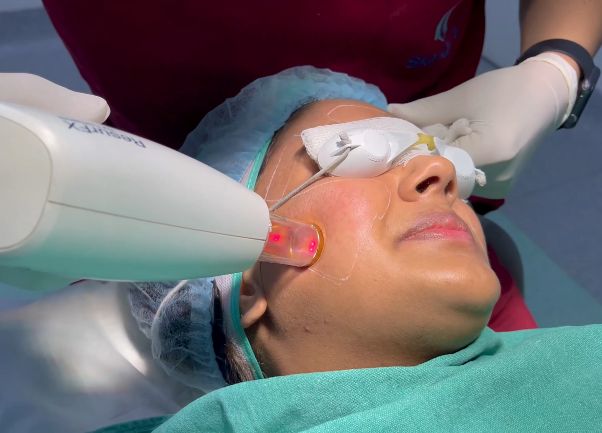
Laser treatment accelerates collagen production. It enhances elasticity, reduces fine wrinkles, and has long-term benefits.
How does botox for eyes work?
Botox stops the nerve impulses to certain muscles. This slows down the muscle contractions. So, the crow’s feet relax and become less noticeable.
Advantages of botox for eyes
Botox treatment is very quick and easy. The effects are noticed in a couple of days. It only takes 10 to 15 minutes. There is no downtime. The effects last for three to four months.
Dr. Jangid advised botox eye treatment for candidates wanting rapid, visible, and natural-looking outcomes without the use of surgery.
Is botox effective in treating crow’s feet?
It is fda-approved and commonly used. It is safe when given by a skilled person. Side effects are minor and temporary. Slight redness or swelling can be noticed. According to dr. Jangid, doing it the right way is important for a balanced effect.
Many people can benefit from a combination of treatments. Botox helps to relax facial muscles, and laser or chemical peeling helps to smoothen the skin. Medical eye creams are also helpful to maintain a smooth skin around the eyes.
Precautions after treatment
Avoid rubbing the area after the botox for eyes. Keep the body erect for a few hours. Refrain from heavy exercise for a day. Use mild skincare products. It is essential to follow all instructions given by the doctor.
When to start crow feet treatment
Botox treatment has no age limit. People start preventive botox treatment in their late twenties. Another set of people may require treatment when the wrinkles have appeared. Early treatment prevents wrinkles from becoming deep and permanent.
Psychological advantages of therapy
Treatment of crow’s feet goes beyond purely cosmetic considerations. Smoothening of the skin can help enhance one’s confidence. This is because it leaves one refreshed and young. Minimal procedures can therefore improve beauty without altering expressions.
It is always recommended to select an experience practitioner. This area demands accuracy. Expert opinions, according to Dr. Jangid, assure safety, symmetry, and durability of the outcome.
Conclusion
Crow’s feet are a natural consequence of the aging process, but proper care and techniques can help lessen the signs. When it comes to skin care, lasers, and eye botox, a lot of safe and effective remedies exist.
To achieve the best outcomes, proper care early on and working out a strategy according to your specific needs will help ensure that your eyes look youthful and healthy while still being natural.
FAQs
What is the best treatment for crow’s feet?
The best treatment for crow’s feet is botox. The crow feet treatment helps to smoothened the skin by relaxing the muscles which helps to develop wrinkles.
Does botox for eyes help to treat wrinkles?
Yes, botox for eyes is one of the best crow feet treatments and is a very painless procedure. This treatment does not require much time, and is a very short procedure. The treatment is carried out through the use of fine needles.
How long does botox treatment last for?
The effect of botox treatment is three to four months. These treatments are performed on a regular basis in order to get smooth and wrinkle free skin. Also, the effects of botox depends on the metabolism rate of the client.
Do crow’s feet come back after the treatment?
Yes, the crow's feet may come back. There is a chance of coming back of wrinkles because botox for eyes temporarily blocks nerve signals to the muscles. Eventually, the body breaks it down.
Can crow's feet be treated without botox?
Yes, there are products that can plump up your skin without invasive injections or fillers if you want to get rid of crow's feet. The easiest approach for getting this is to look for moisturising agents, which are hydrating substances that provide your skin with enough hydration.