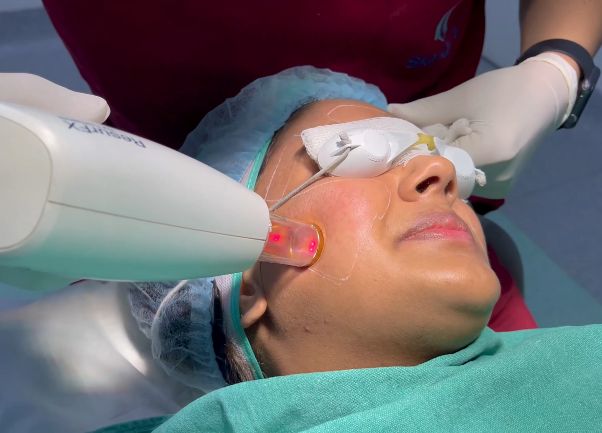
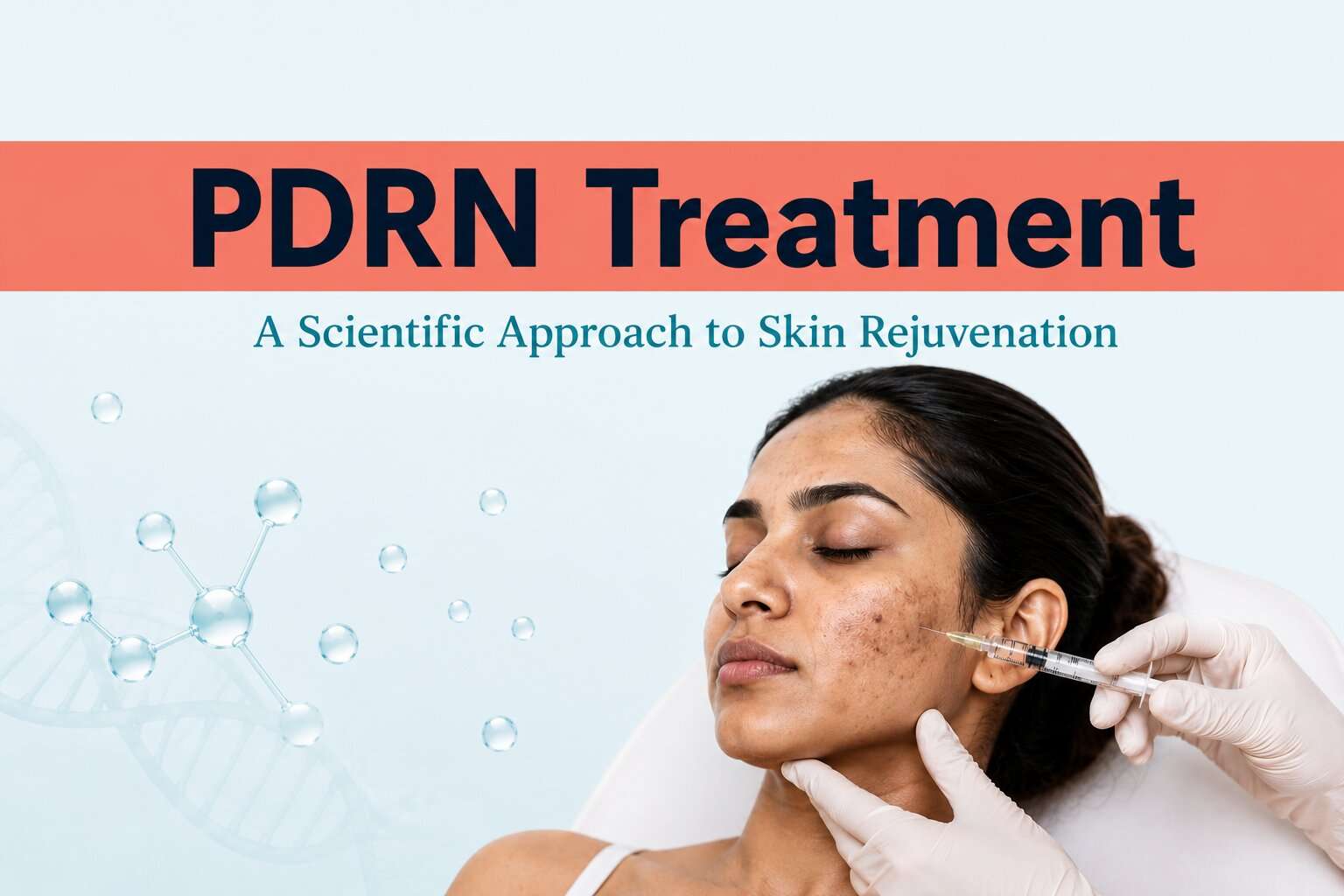
Unlike traditional cosmetic treatments that primarily target surface concerns, PDRN (Polydeoxyribonucleotide) treatment works by supporting tissue repair at the cellular level. Originally developed for wound healing and tissue regeneration, injectable PDRN has gradually found its place in aesthetic dermatology due to its potential to improve skin quality, hydration, elasticity, and overall skin rejuvenation. Current evidence suggests that injectable PDRN may promote tissue repair and improve certain signs of skin ageing, although the strength of evidence varies depending on the indication, injection protocol, and study quality.
If you are considering PDRN treatment for skin rejuvenation, understanding how it works, who may benefit from it, and what to realistically expect can help you make an informed decision.
What is PDRN?
PDRN (Polydeoxyribonucleotide) is a purified mixture of DNA fragments, commonly derived from salmon species through highly controlled purification processes. These DNA fragments are biocompatible and have been studied for decades in regenerative medicine because of their role in supporting tissue repair and wound healing.
Initially used in medical fields such as plastic surgery, orthopaedics, diabetic wound management, and ulcer treatment, PDRN has gradually expanded into aesthetic dermatology for its regenerative properties. Rather than acting as a filler, it functions as a regenerative skin treatment, encouraging the skin's own repair processes.
Because of these regenerative properties, PDRN is often referred to as:
- Salmon DNA treatment
- Injectable skin booster
- PDRN facial
- Skin repair therapy
Although these terms are commonly used, they all describe treatments that aim to improve skin health through tissue regeneration rather than simply adding volume.
How Does PDRN Treatment Work?
One of the reasons dermatologists find PDRN particularly interesting is that it works through biological pathways involved in tissue healing rather than simply masking visible skin concerns.
1. Activation of Adenosine A2A Receptors
PDRN activates specific receptors called adenosine A2A receptors, which play an important role in regulating inflammation, promoting wound healing, and supporting tissue repair.
Activation of these receptors encourages the skin to create an environment that is more favourable for healing while reducing excessive inflammation.
2. Fibroblast Stimulation
Fibroblasts are specialised skin cells responsible for producing:
- Collagen
- Elastin
- Components of the skin's extracellular matrix
PDRN supports fibroblast activity, which may contribute to healthier skin structure and improved elasticity over time.
3. Collagen Production
As collagen naturally declines with age, the skin becomes thinner, less elastic, and more prone to fine lines.
By supporting fibroblast function, PDRN may encourage collagen synthesis, helping improve:
- Skin firmness
- Fine lines
- Wrinkle reduction
- Overall skin texture
It's important to note that collagen remodelling is gradual, so visible improvements typically develop over several weeks rather than immediately.
4. Tissue Regeneration and Skin Repair
Another proposed mechanism involves the salvage pathway, where the DNA building blocks supplied by PDRN can be recycled by repairing cells. This may help support cellular repair while reducing the energy required for new DNA synthesis during tissue healing.
5. Anti-inflammatory Effects
Inflammation is an essential part of healing, but prolonged inflammation can delay skin recovery.
Research suggests that PDRN may help regulate inflammatory responses while supporting new blood vessel formation (angiogenesis), which contributes to tissue repair.
Benefits of PDRN Treatment for Skin Rejuvenation
Because PDRN focuses on improving skin quality rather than simply filling wrinkles, many dermatologists recommend it for patients seeking natural-looking rejuvenation.
Potential benefits may include:
- Improved skin hydration
- Better skin elasticity
- Enhanced skin glow
- Smoother skin texture
- Reduction in fine lines
- Support for wrinkle reduction
- Improved skin recovery following aesthetic procedures
- Better appearance of mild acne scars
- Healthier skin barrier function
- Overall skin rejuvenation
Current clinical studies report encouraging outcomes in skin texture, elasticity, hydration, and wrinkle appearance. However, researchers also note that more high-quality clinical trials are needed before definitive conclusions can be drawn regarding all aesthetic indications.
Patients should understand that PDRN is not an instant anti-ageing solution. Instead, it is considered a regenerative approach that supports gradual skin improvement over time.
Who is a Ideal Candidate for PDRN Treatment?
PDRN treatment may be suitable for adults who wish to improve overall skin quality rather than dramatically change facial appearance.
You may be a suitable candidate if you have:
- Early signs of skin ageing
- Fine lines
- Mild skin laxity
- Dull or dehydrated skin
- Uneven skin texture
- Mild acne scars
- Skin recovering after selected aesthetic procedures
- Sun-damaged skin
A consultation with a qualified dermatologist in Delhi is essential to determine whether PDRN aligns with your skin concerns and treatment goals.
The treatment may not be appropriate for everyone, including individuals with active skin infections, certain allergies, uncontrolled medical conditions, pregnancy or breastfeeding (unless advised otherwise by their treating physician), or those with specific contraindications identified during consultation. An individual medical assessment is always recommended before treatment.
What Happens During the PDRN Treatment Procedure?
The exact protocol may vary depending on your skin condition and your dermatologist's assessment.
A typical treatment session generally includes:
Consultation
Your dermatologist evaluates:
- Medical history
- Skin concerns
- Previous treatments
- Treatment expectations
An individualised treatment plan is then created.
Skin Preparation
The skin is cleansed thoroughly.
A topical numbing cream may be applied to improve comfort.
Delivery of PDRN
PDRN is commonly administered using fine microinjections into targeted areas of the skin. In some cases, dermatologists may combine it with other evidence-based aesthetic procedures where clinically appropriate.
The procedure generally takes 30-45 minutes, depending on the treatment area.
Aftercare
Patients are usually advised to:
- Avoid heavy exercise for 24 hours
- Avoid excessive sun exposure
- Use sunscreen regularly
- Follow dermatologist-recommended skincare
- Avoid touching treated areas unnecessarily
Most patients can resume normal daily activities shortly after treatment, although individual recovery experiences may vary.
Recovery After PDRN Treatment
One of the reasons PDRN treatment for skin rejuvenation is gaining popularity is that it generally involves minimal downtime. Most people can return to their routine the same day or the following day, making it a practical option for busy professionals.
However, as with any injectable aesthetic procedure, a short recovery period is normal.
What to Expect After Treatment
Immediately after the procedure, you may notice:
- Mild redness at the injection sites
- Slight swelling or puffiness
- Small needle marks
- Mild tenderness or sensitivity
These effects are usually temporary and tend to resolve within 24-72 hours, although recovery varies from person to person.
Aftercare Tips
To support optimal healing, your dermatologist may recommend:
- Applying sunscreen with SPF 30 or higher daily
- Avoiding direct sun exposure for the first 24-48 hours
- Skipping strenuous exercise, saunas, and steam rooms for 24 hours
- Avoiding makeup for several hours after treatment (or as advised)
- Using gentle skincare products while the skin recovers
- Staying well hydrated
Following your dermatologist's aftercare instructions can help reduce irritation and support the skin's natural healing process.
When Will You See Results?
Unlike dermal fillers, which provide immediate volume, PDRN works by encouraging the skin's repair mechanisms. As a result, improvements develop gradually.
Many patients notice initial improvements in skin hydration and radiance within 2-4 weeks, while changes in texture, elasticity, and fine lines may continue to develop over the following weeks as collagen remodeling progresses. Individual results depend on factors such as age, skin condition, lifestyle, and adherence to the recommended treatment plan.
Possible Side Effects of PDRN Treatment
When performed by a qualified dermatologist using approved products and appropriate injection techniques, PDRN treatment is generally considered well tolerated. However, no aesthetic procedure is entirely free of risks.
Common Temporary Side Effects
Some patients may experience:
- Mild redness
- Swelling
- Bruising
- Tenderness
- Itching at injection sites
- Temporary discomfort
These effects are typically mild and self-limiting.
Less Common Risks
Although uncommon, potential complications may include:
- Infection
- Allergic or hypersensitivity reactions
- Persistent swelling
- Nodules or unevenness at injection sites
- Delayed healing
Patients should contact their dermatologist if they experience severe pain, increasing redness, fever, pus, or symptoms that worsen rather than improve after treatment.
A thorough consultation before treatment helps identify any factors that may increase the risk of complications.
How Many PDRN Sessions Are Needed?
There is no universal treatment schedule because every patient's skin concerns and goals are different.
For skin rejuvenation treatment, dermatologists commonly recommend a series of sessions rather than a single treatment to achieve gradual improvements. Depending on the individual's skin condition, many treatment plans involve 3-4 sessions spaced approximately 2-4 weeks apart, followed by maintenance sessions if considered appropriate. The exact protocol should always be individualized after clinical assessment.
Patients with:
- Early signs of ageing
- Dull skin
- Mild acne scars
- Skin dehydration
may require fewer sessions than those with more significant concerns.
Your dermatologist will recommend a personalized treatment schedule based on your skin assessment and treatment goals.
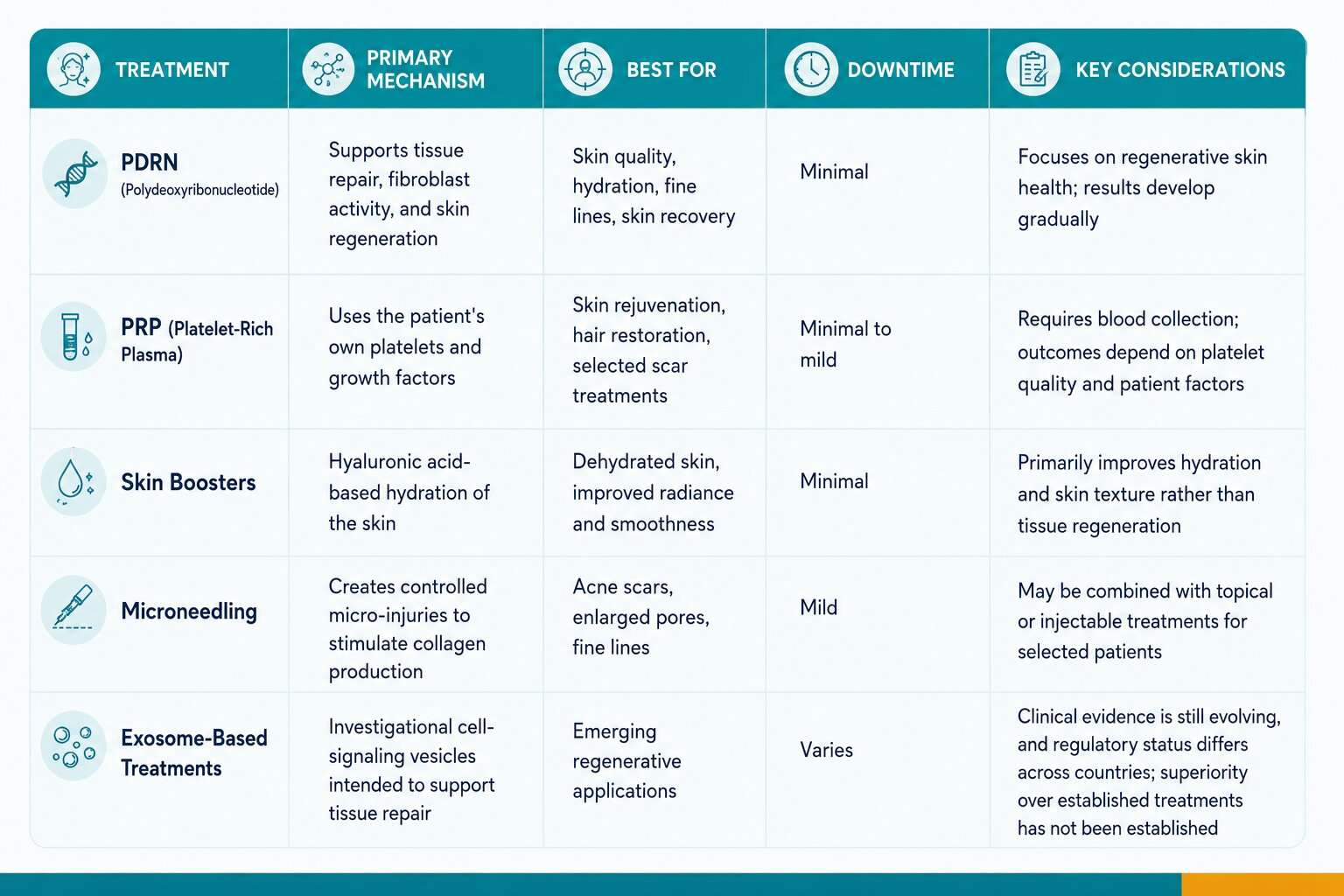
PDRN vs Other Skin Rejuvenation Treatments
Many patients wonder how PDRN treatment in Delhi compares with other popular aesthetic procedures. While each treatment has its own role, the most suitable option depends on your skin concerns, expectations, and your dermatologist's evaluation.
Also read : Skin Booster Treatment in Delhi: Restore Hydration, Glow & Skin Quality Naturally
Why Choose SkinQure for PDRN Treatment in Delhi?
Choosing the right clinic is just as important as selecting the treatment itself. PDRN therapy should always begin with a detailed skin assessment and be performed under the supervision of a qualified dermatologist.
At SkinQure, PDRN treatment is offered as part of a personalized, evidence-based approach to skin rejuvenation. The clinic focuses on understanding each patient's skin condition, concerns, and long-term goals before recommending any procedure.
Patients choose SkinQure because of its:
- Consultation-led, individualized treatment plans
- Care under Dr. Jangid (MBBS, MD – Dermatology, Venereology & Leprosy), Dermatologist, Hair Transplant Surgeon, and Cosmetologist
- Modern aesthetic technology and standardized treatment protocols
- Emphasis on patient safety, informed decision-making, and realistic expectations
- Availability of non-invasive PDRN treatment at conveniently located clinics in Saket and Punjabi Bagh, Delhi
The goal is not simply to improve appearance, but to support healthier skin through scientifically informed, patient-centered care. Individual treatment plans may also incorporate complementary therapies where clinically appropriate, based on your dermatologist's assessment.
Frequently Asked Questions (FAQs)
1. What is PDRN treatment used for?
PDRN (Polydeoxyribonucleotide) treatment is a regenerative aesthetic procedure that aims to improve overall skin quality. It is commonly used to support skin rejuvenation, improve hydration, enhance skin texture, reduce the appearance of fine lines, and aid skin recovery after selected aesthetic procedures. Depending on individual needs, a dermatologist may also recommend it for mild acne scars or sun-damaged skin.
2. Is PDRN the same as Salmon DNA treatment?
The terms are often used interchangeably. PDRN is a purified mixture of DNA fragments, commonly derived from salmon species through controlled purification processes. While "Salmon DNA treatment" is a popular name, the therapeutic effect is attributed to the purified polydeoxyribonucleotides rather than the source itself.
3. Is PDRN treatment painful?
Most patients tolerate the procedure well. A topical numbing cream is usually applied before treatment to improve comfort. During the injections, you may feel mild pinching or pressure, but significant discomfort is uncommon.
4. How long does a PDRN treatment session take?
A typical session takes 30-45 minutes, depending on the treatment area and the number of injection points. Your consultation and post-treatment instructions may add a little extra time.
5. How many PDRN sessions will I need?
There is no one-size-fits-all treatment plan. Many patients undergo 3-4 sessions spaced 2-4 weeks apart, followed by maintenance treatments if recommended by their dermatologist. The exact number depends on your skin condition, age, treatment goals, and response to therapy.
6. When will I start seeing results?
Some people notice improved skin hydration and radiance within a few weeks. Improvements in skin texture, elasticity, and fine lines generally develop gradually over several weeks as the skin's natural repair processes continue. Results vary from person to person.
7. Are there any side effects of PDRN treatment?
Temporary redness, mild swelling, bruising, or tenderness at the injection sites are the most commonly reported side effects. These usually resolve within a few days. Although uncommon, infection or allergic reactions can occur with any injectable treatment. Always seek treatment from a qualified dermatologist and follow the recommended aftercare instructions.
8. Can PDRN be combined with other aesthetic treatments?
Yes. Depending on your skin concerns, a dermatologist may recommend combining PDRN with treatments such as microneedling, laser procedures, skin boosters, or other evidence-based therapies. The decision should always be made after a thorough skin assessment and based on clinical suitability.
9. Who should avoid PDRN treatment?
PDRN treatment may not be suitable for everyone. Individuals with active skin infections, known allergies to any treatment components, certain uncontrolled medical conditions, or those who are pregnant or breastfeeding should discuss their medical history with a dermatologist before considering treatment.
10. Where can I get PDRN treatment in Delhi?
If you're considering PDRN treatment in Delhi, choose a clinic that offers consultation-led care, evidence-based treatment protocols, and procedures performed by qualified dermatologists. At SkinQure, PDRN treatment is available at the Saket and Punjabi Bagh clinics under the supervision of experienced dermatologists, including Dr. Jangid (MBBS, MD - Dermatology, Venereology & Leprosy).
Conclusion
As regenerative dermatology continues to advance, PDRN treatment has become an increasingly discussed option for individuals seeking healthier, more resilient skin through minimally invasive procedures. Unlike treatments that focus only on the skin's surface, PDRN aims to support the body's natural repair mechanisms by promoting tissue regeneration, collagen production, and improved skin quality.
Current scientific evidence suggests that injectable PDRN shows promising potential in enhancing skin hydration, elasticity, texture, and overall rejuvenation. However, outcomes vary depending on individual skin concerns, treatment protocols, and overall health. While many patients experience noticeable improvements, it is important to maintain realistic expectations and understand that regenerative treatments work gradually rather than delivering instant or permanent results.
If you're considering PDRN treatment for skin rejuvenation, the first step is a detailed consultation with a qualified dermatologist who can assess your skin, discuss your goals, and recommend whether this treatment is appropriate for you.
Book a Consultation at SkinQure
Interested in learning whether PDRN treatment in Delhi is right for your skin?
Schedule a consultation with Dr. Jangid (MBBS, MD - Dermatology, Venereology & Leprosy), Dermatologist, Hair Transplant Surgeon, and Cosmetologist at SkinQure. Following a comprehensive skin assessment, you'll receive a personalized treatment plan based on your concerns, skin type, and clinical needs.