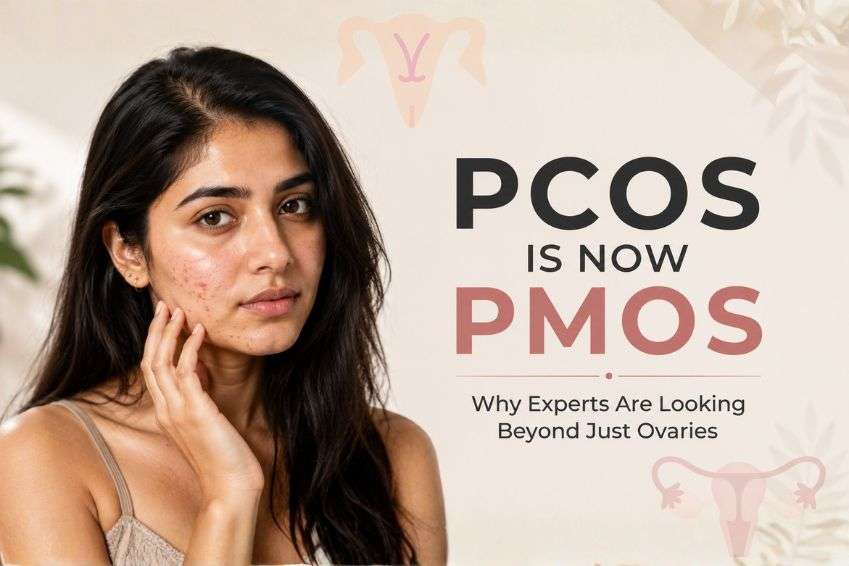
Maybe It Was Never Just About the Ovaries
For years, women struggling with acne, hair fall, stubborn pigmentation, weight gain, irregular periods, or facial hair were often told:
“It’s normal.”
“Just lose weight.”
“It’s only hormonal.”
But science is slowly changing that conversation.
In recent years, many global women’s health experts, endocrinologists, and medical organizations have started shifting from the traditional term PCOS (Polycystic Ovary Syndrome) toward a broader understanding called PMOS (Polyendocrine Metabolic Ovarian Syndrome).
Why?
Because the condition is not just about ovarian cysts.
In fact, many women diagnosed with PCOS may not even have ovarian cysts at all. The older name often failed to reflect the full complexity of the disorder.
Experts now recognize that this condition affects much more than the ovaries - including:
- Hormones
- Metabolism
- Insulin sensitivity
- Skin health
- Hair growth
- Inflammation
- Emotional wellbeing
- Energy levels
- Long-term metabolic health
The shift toward the term PMOS helps medically explain what millions of women have already experienced for years:
The symptoms don’t stop at the ovaries.
They appear on the skin, scalp, hormones, energy levels, and overall health.
For dermatologists, this evolving understanding is especially important because the skin are often among the earliest visible signs of internal hormonal imbalance.
What Is PMOS?
PMOS (Polyendocrine Metabolic Ovarian Syndrome) is an evolving medical concept that views traditional PCOS as a broader endocrine and metabolic disorder rather than only an ovarian condition.
The term highlights three major aspects:
1. Polyendocrine
Multiple hormonal systems in the body may be affected - not just reproductive hormones.
2. Metabolic
Insulin resistance, inflammation, weight changes, and metabolic dysfunction often play a major role.
3. Ovarian
Ovarian dysfunction still remains part of the condition, but it is no longer seen as the only defining feature.
This newer understanding helps explain why women with PMOS may experience symptoms involving the skin, scalp, weight, mood, and metabolism - even before gynecological symptoms become obvious.
PCOS vs PMOS: What’s Actually Changing?
Traditional Understanding of PCOS
Historically, PCOS was mainly associated with:
- Irregular periods
- Fertility issues
- Ovarian cysts
- Weight gain
While these remain important, many women continued to struggle with additional symptoms that were often overlooked.
These included:
- Persistent hormonal acne
- Scalp thinning
- Facial hair growth
- Oily skin
- Dark neck pigmentation
- Chronic fatigue
- Mood fluctuations
- Difficulty losing weight
The term PMOS acknowledges that these are not “side symptoms.”
They are central to the condition itself.
Why Experts Are Looking Beyond Ovaries
Modern research increasingly connects PMOS with:
- Insulin resistance
- Chronic low-grade inflammation
- Elevated androgen hormones
- Metabolic syndrome
- Lifestyle and stress factors
- Cardiovascular risk
This explains why the condition can affect so many parts of the body simultaneously.
For many women, the first signs of PMOS appear externally through skin and hair changes long before diagnosis happens.
That’s why dermatologists today often play an important role in identifying early hormonal imbalance.
How PMOS Affects Your Skin & Hair
Your skin and scalp can sometimes act like internal health mirrors.
Hormonal imbalance may show up visibly in ways that many women dismiss for years.
1. Hormonal Acne
One of the most common skin signs of PMOS is persistent hormonal acne.
This may appear as:
- Painful jawline acne
- Deep cystic pimples
- Acne flare-ups before periods
- Persistent adult acne after age 25
- Acne scars from repeated inflammation
Unlike teenage acne, hormonal acne is often linked to increased androgen activity and excess oil production.
2. Excess Facial Hair Growth
Increased androgen levels may trigger unwanted hair growth on:
- Chin
- Upper lip
- Neck
- Chest
- Abdomen
This condition, known as hirsutism, can deeply affect confidence and emotional wellbeing.
3. Dark Neck & Underarm Pigmentation
Darkening around the neck or underarms may sometimes indicate insulin resistance.
This condition, called acanthosis nigricans, is commonly associated with metabolic dysfunction and hormonal imbalance.
Many women mistake it for tanning or poor hygiene when it may actually be a deeper internal sign.
4. Oily Skin & Inflammation
PMOS may also increase:
- Excess sebum production
- Enlarged pores
- Skin sensitivity
- Inflammatory flare-ups
- Redness and irritation
Chronic inflammation can worsen both acne and pigmentation over time.
Common Skin Signs Women Often Ignore
Sometimes the body whispers before it screams.
Common signs that should not be ignored include:
- Acne after the teenage years
- Sudden hair thinning
- Facial hair growth
- Oily skin with irregular periods
- Persistent pigmentation
- Dark neck patches
- Scalp visibility increasing
- Acne resistant to normal skincare
- Weight gain with hormonal symptoms
These signs may indicate underlying endocrine and metabolic imbalance.
Hormonal Acne, Hair & Pigmentation Explained
The Hormone Connection
PMOS often involves elevated androgen hormones.
These hormones can:
- Stimulate oil glands
- Trigger inflammatory acne
- Shrink scalp hair follicles
- Increase facial hair growth
At the same time, insulin resistance can increase inflammatory activity throughout the body.
This creates a cycle where:
Hormonal imbalance - inflammation - skin flare-ups - stress - worsening symptoms.
The Role of Insulin Resistance & Inflammation
One of the biggest shifts in the PCOS vs PMOS discussion is the focus on metabolism.
Insulin resistance may:
- Increase androgen production
- Trigger weight gain
- Worsen acne
- Increase pigmentation
- Affect energy levels
- Intensify inflammation
This is why PMOS is increasingly understood as both a hormonal and metabolic condition.
Your skin may be one of the earliest places where this imbalance becomes visible.
A Dermatologist’s Perspective on PMOS
“Many women think acne or hair fall is just cosmetic, but these can often be visible signs of deeper hormonal and metabolic imbalance. Early dermatological evaluation can help identify underlying issues before they significantly affect long-term skin, scalp, and overall health.”
- Dr. Ayushi Tyagi, Dermatologist, SkinQure
- Dr. Ayushi Tyagi, Dermatologist, SkinQure
Dermatologists today increasingly work alongside gynecologists and endocrinologists to support women dealing with hormonal skin and hair concerns.
Lifestyle + Skin Management Tips
Managing PMOS usually requires a holistic approach.
Prioritize Balanced Nutrition
Focus on:
- Protein-rich meals
- Fiber-rich foods
- Low glycemic nutrition
- Hydration
- Healthy fats
Reducing excessive sugar and processed foods may support insulin sensitivity.
Improve Sleep & Stress Management
Stress hormones can worsen hormonal imbalance.
Helpful habits include:
- Consistent sleep schedule
- Walking or exercise
- Yoga
- Meditation
- Stress reduction routines
Conclusion
The conversation around women’s hormonal health is finally evolving.
And perhaps that change is long overdue.
Because for many women, the struggle was never just about ovarian cysts.
It was about painful acne that affected confidence.
Hair fall that felt emotionally exhausting.
Pigmentation that never improved.
Symptoms that were dismissed for years.
The growing awareness around PMOS is helping women understand that skin and hair changes are not always superficial concerns.
Sometimes, they are the body’s earliest signals asking for attention, care, and deeper hormonal evaluation.
At SkinQure, Delhi, our dermatology-led approach focuses not only on visible skin concerns but also on understanding the hormonal and metabolic factors behind them.
Disclaimer:
The information shared in this article is intended for general educational and awareness purposes only and should not be considered a substitute for professional medical advice, diagnosis, or treatment. Always consult a healthcare professional, or your doctor regarding any medical concerns or symptoms.