Mole Removal Safety: Laser vs Surgical Methods
Moles are quite common skin growths that a majority of people have since childhood or early adulthood. Many moles may remain stable, but some may change with time either in shape, size, or color. Others can be problematic cosmetically, especially on the face, neck, or hands. Here's when mole removal safety becomes important. It's choosing the right method and the right clinic.
At the SkinQure Skin Clinic, Delhi, it is made certain that removal of moles is done under expert dermatological guidance, ensuring safety and comfort, plus natural-looking results for the patients.
It will help to explain the removal of mole and also compare the laser and surgical ways, and highlight how SkinQure Skin Clinic in Delhi helps patients make the right decision.
When is it necessary to remove a mole?
Moles are groups of pigmented skin cells. They may appear anywhere on the body as flat or raised, light brown or dark. Most moles are benign and thus do not need treatment. However, removal may be recommended if a mole:
Changes in color, size, or shape
Becomes itchy, painful, or bleeds
Appears suddenly in adulthood
Causes cosmetic discomfort or low confidence
According to Dr. Jangid, any mole showing sudden changes should always be examined by a qualified dermatologist before deciding on removal.
Why is Mole Removal Safety important to consider?
The most important factor in the process of mole removal is safety. Improper use of any techniques can result in scars, infections, or an unsuccessful procedure. It is important to have a professional evaluation to confirm the mole is harmless and fit for a specific procedure.
At SkinQure, each patient is given a thorough skin analysis prior to surgery for mole removal safety.
Dr. Jangid suggested that mole removal must be done in a clinical setting and with sterile equipment. This will avoid complications and help fast healing.
Laser mole removal: a modern approach
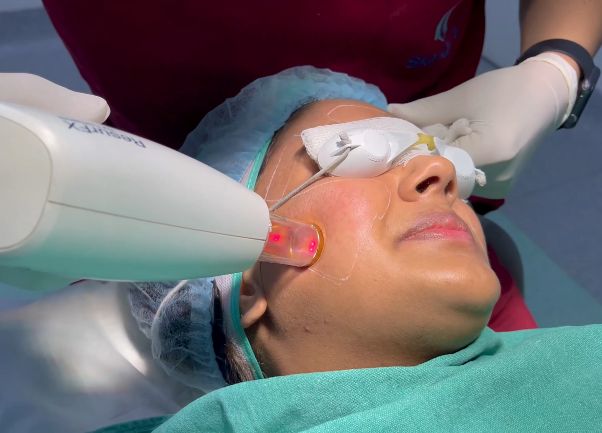
Laser treatments are commonly used in the removal of small non-cancerous moles. Laser treatments involve the use of light to destroy the pigment cells. The cells are then removed naturally.
Benefits of Laser Treatment
Here’s how laser treatment helps in mole removal:
Minimally invasive procedure
No cutting or stitches
Less discomfort during treatment
Minimal downtime
Reduced risk of scarring
Laser treatment works best for flat or lightly raised moles, by offering mole removal safety. However, the option is not always good for deep or suspicious moles; a dermatologist in Delhi would be the best professional to tell that.
Surgical mole removal method
Surgical mole removal is a process in which a mole is cut out with a scalpel. The area is then stitched up. This method is generally used for larger or raised moles.
Benefits of mole removal method:
Fully removal of deep moles
Medical testing only
A smaller chance of mole recurrence
Dr. Jangid further explains that the surgical method is done when a mole needs a biopsy or histopathological examination. Though it involves stitches, healing is usually smooth when performed by experts.
Laser vs Surgical Methods: Safety Comparison
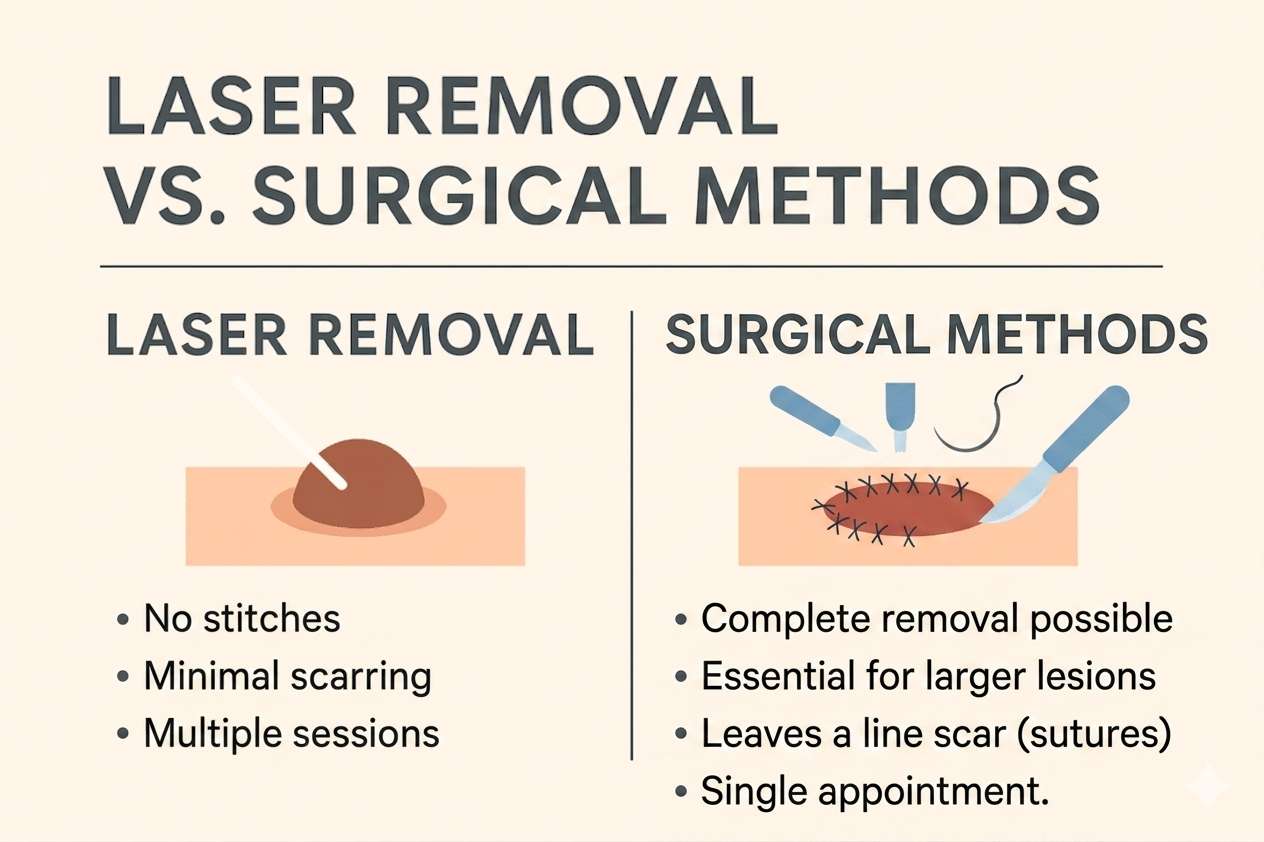
Both options are safe whether done by experienced professionals. The choice depends on the type, size, and depth of the mole.
One benefits from the fast recovery time and lack of scarring with the localized treatment by laser. Complete removal from the body with surgical extraction comes with clear diagnostic benefits, according to Dr. Jangid. This explains why proper evaluation is paramount.
At SkinQure, doctors explain all options to the patients. This helps them to make informed decisions without any fears.
How SkinQure skin clinic in Delhi Helps in mole removal?
SkinQure Skin Clinic, Delhi, specializes in high-quality treatment and provides a comfortable experience to patients. The clinic adheres to very high safety standards for all treatments. Every treatment plan is tailor-made.
Here is how SkinQure helps patients:
Detailed skin and mole assessment
Expert guidance by trained specialists
Sterile and controlled clinical environment
Post-procedure care and follow
Dr. Jangid also suggested regular follow-ups after removal of moles. SkinQure offers support even after the completion of the treatments.
Recovery and Aftercare of mole removal
Depending on the method selected for treatment, the recovery time may vary. The laser treatment method heals shortly. Surgical removal might require a couple of weeks.
How to take care of post mole removal for safety:
Keep the area clean
Avoid sun exposure for a week
Avoid touching or scratching the site
Strictly follow to medical prescription only
Apply only the prescribed ointment
How to choose the right Dermatologist for mole removal?
Choosing an experienced dermatologist in Delhi is necessary for the mole removal safety. Apart from this experience, clinic, and qualification of the doctor are all extremely important. SkinQure is a clinic known for its ethical and transparent practice.
Dr. Jangid also says that patients should never try to remove moles themselves or obtain information from unknown sources. Professional care is both safe and secure.
Conclusion
Mole removal is safe and effective if done properly. Laser and surgical mole removals have their advantages. Understanding mole removal safety helps the patients choose the right option. Advanced technology, expert care, and treatment with patient focus ensure that SkinQure Skin Clinic Delhi has given reliable results with each of its services.
FAQs
1. Why is Mole Removal Safety Important?
Safety in removing moles ensures that the treatment will not result in infection, leaving ugly scars, or incompletely removed moles. A Delhi professional dermatologist assesses the mole before removal, which is one way to avoid the risks.
2. Is laser treatment safe in mole removal procedure?
Yes, Laser treatment for small non-cancerous moles is considered to be safe. It offers a minimal down-time and aesthetically good. However it is necessary to check whether the surgeon is an expert laser surgeon or not.
3. When is surgical mole removal recommended?
Surgical removal of the mole is recommended in cases where the mole is large, raised, or suspicious. It enables the removal and medical investigation of the mole, making it far safer to have the mole removed.