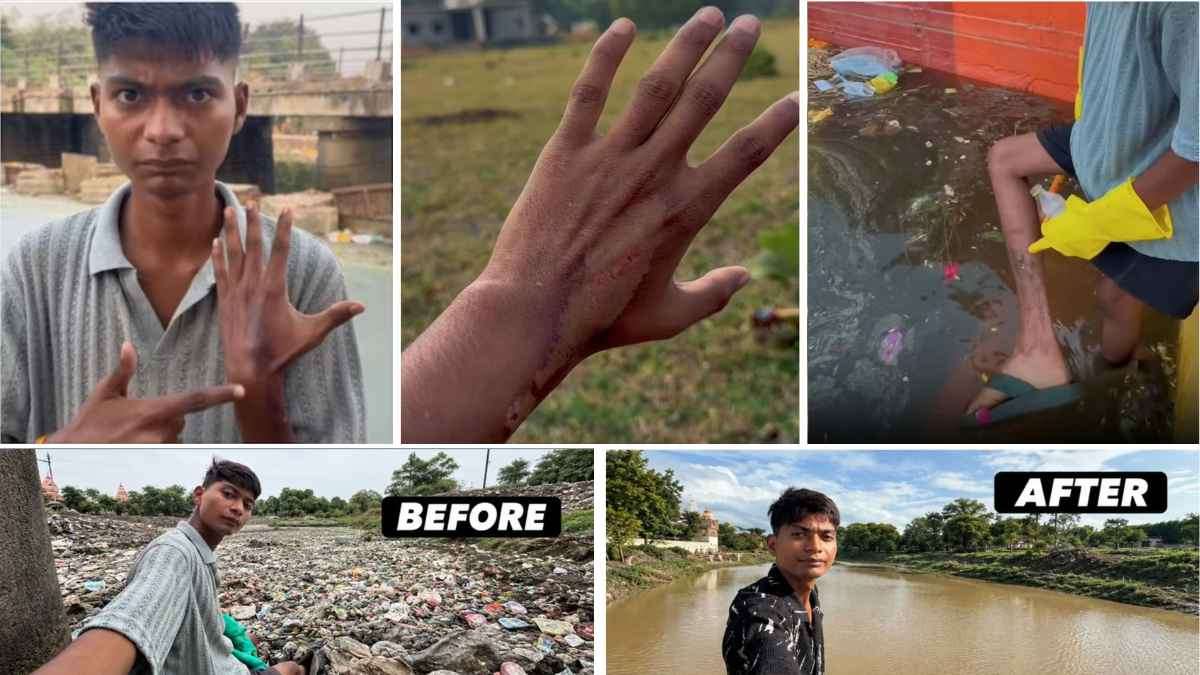
He showed the damage himself in an Instagram video. His exact medical diagnosis has not been reported, but his experience raises a question that matters well beyond one river: what does dirty water do to human skin?
The risk is real for sanitation workers, flood-affected families, farmers and anyone who wades through contaminated water. Here is what dermatologists want you to know.
Who is Bittu Tabahi?

Bittu Tabahi is the online name of Surendra Singh Choudhary, a 21-year-old B.Sc. student from Biaora in Rajgarh district, Madhya Pradesh. Troubled by the garbage and smell near a riverside temple, he began cleaning the Ajnar River on 26 January 2026. A few friends joined him at first, but he carried on alone after they dropped out, spending his own savings on basic tools.
His before-and-after posts went viral. Industrialist Anand Mahindra shared his work, Madhya Pradesh Chief Minister Mohan Yadav honoured him, and Boyan Slat of The Ocean Cleanup publicly offered him a job. The local municipality sent machinery to help and has proposed a Rs 14.77 crore sewage treatment plant to deal with the five drains feeding the river.
Reports describe limb infections, rashes and encounters with snakes, and he does not know how to swim. After an eight-month effort, he found the Ajnar littered again within 30 days of leaving for a Yamuna clean-up, and said he would not give up.
Why Did Cleaning the Ajnar River Affect Bittu Tabahi's Skin?
Bittu's skin problems have been linked to prolonged contact with toxic wastewater and decomposing waste, although his exact diagnosis has not been made public. For months, he worked by hand in a river fed by five large drains and clogged with plastic, algae and other debris. His protection was limited to basic items such as rubber gloves and boots, which cannot fully shield the skin during long hours in dirty water. The result was persistent itching and painful peeling, particularly on his hands and legs, the areas in closest contact with the waste.
How polluted water damages the skin
Polluted water harms skin in two ways: it wears down the skin barrier, then exposes that weakened skin to germs and chemicals. Sewage-laden rivers can carry bacteria, fungi and parasites along with irritants such as heavy metals, pesticides, solvents and detergents.
"Your skin acts as a protective barrier, and prolonged exposure to contaminated water can weaken this barrier by causing excessive hydration of the outer skin layer. When the skin becomes damaged, cracks or peeling may develop, allowing germs and harmful chemicals to penetrate more easily," says Dr. Jangid, MBBS, MD (Dermatology).
Duration matters too. In a study of children exposed to contaminated river water, dermatitis and fungal skin infections were the most common diagnoses, and most patients had been exposed for more than six hours. In a study of people exposed to wastewater, dermatologists most often found contact dermatitis, with the hands, feet and legs most affected.
Peeling and itching can come from irritation, fungus or bacteria, and each is treated differently. Applying a steroid cream without a diagnosis can make a fungal infection worse," says Dr. Jangid.
Skin problems linked to contaminated water
- Irritant contact dermatitis: Direct barrier damage from chemicals or dirty water. You may notice redness, burning, dryness and peeling.
- Fungal infection (tinea, athlete's foot): Fungus thriving on skin kept wet. You may notice itchy, scaly patches and flaking between toes or fingers.
- Bacterial infection (folliculitis, cellulitis): Bacteria entering through hair follicles, cuts or cracks. You may notice pus-filled bumps or spreading redness, warmth and pain.
- Swimmer's itch (cercarial dermatitis): A reaction to parasites in some fresh water. You may notice itchy red spots on exposed skin.
- Urticaria (hives): An allergic-type skin reaction. You may notice raised, itchy welts that come and go.
How to protect your skin
If you must enter dirty water, cover your skin and limit your time in it.
- Wear waterproof gloves and boots that seal well, and replace them if they tear.
- Cover cuts and scratches with a waterproof dressing before going in.
- Take regular breaks so your skin can dry.
- Wash with clean water and mild soap as soon as you finish.
- Dry thoroughly, especially between fingers and toes, then moisturise.
- Wash work clothes separately and never reuse damp socks or gloves.
- Check that your tetanus vaccination is up to date.
Protective gear only works effectively when the skin underneath is kept clean and dry. Prolonged use of wet boots and gloves can trap sweat, creating a warm and humid environment that encourages fungal growth and increases the risk of skin infections," says Dr. Jangid, MBBS, MD (Dermatology).
When to see a dermatologist
See a dermatologist if a rash lasts more than a few days, keeps spreading, or returns after home care. Avoid self-medicating with steroid or combination creams.
Seek medical care urgently if you notice any of these after exposure:
- Fever or chills with a rash or wound
- Rapidly spreading redness, swelling or severe pain
- Pus, or a wound that is not healing
- Severe muscle aches, or yellowing of the eyes, which can signal leptospirosis
Frequently asked questions
Can polluted water cause skin infections?
Yes. Contaminated water can carry bacteria, fungi and parasites, and long exposure weakens the skin barrier that normally keeps them out.
Why does skin peel after contact with dirty water?
Peeling often follows irritation of the outer skin layer. It can also signal a fungal infection, so a persistent case should be examined.
Does washing immediately help?
Washing with clean water and mild soap removes irritants and germs from the surface. It lowers the risk but cannot remove it completely.
Can I use an over-the-counter cream for the rash?
It is better to get a diagnosis first. The wrong cream, especially a steroid on a fungal infection, can worsen the problem.
Who is most at risk?
Sanitation workers, river and drain cleaners, farmers and flood-affected people face higher exposure. People with eczema, diabetes or weakened immunity may be more vulnerable.
Medical disclaimer: This article is for general awareness and does not replace a consultation with a qualified doctor. Information about Bittu Tabahi has been taken from publicly available online platforms. He has not been examined by SkinQure, and the medical comments are general information rather than an assessment of his condition.
Sources:
The CSR Journal: skin infections after the Ajnar clean-up
Urban Agriculture Magazine: wastewater and skin problems
Medisur: skin disease after contaminated water exposure
Sources:
The CSR Journal: skin infections after the Ajnar clean-up
Urban Agriculture Magazine: wastewater and skin problems
Medisur: skin disease after contaminated water exposure