
When winter arrives, a long, hot shower can feel like the perfect way to escape the cold. However, that comforting hot water may not be doing your skin any favours.
If you have noticed dry patches, rough skin, itching or tightness after bathing, your shower routine could be contributing to the problem.
Hot water is not the only reason skin becomes dry in winter. Cold weather, low humidity, indoor heating and harsh skincare products can also affect the skin's natural protective barrier.
So, should you stop taking hot showers altogether? Not necessarily. Understanding how water temperature affects your skin can help you make a few simple changes to your winter skincare routine.
Can Hot Showers Cause Dry Skin in Winter?
Yes. Hot showers can worsen dry skin, particularly when you bathe for a long time or use harsh soaps and body washes.
Your skin has a natural protective barrier containing lipids, including ceramides and other fats. These help maintain hydration and protect the skin from external irritants.
Very hot water and prolonged washing can remove some of these protective surface lipids. As a result, the skin may lose moisture more easily and become dry or irritated.
This is why dermatologists recommend using lukewarm rather than very hot water, especially if you already have dry or sensitive skin.
According to the American Academy of Dermatology (AAD), keeping baths and showers short, around 5 to 10 minutes, and using warm water can help prevent dryness from getting worse.
Why Does Skin Become Drier During Winter?
Winter creates several conditions that make it harder for the skin to retain moisture.
1. Low Humidity Increases Moisture Loss
During winter, outdoor humidity often decreases. Indoor heating can also make the air drier. This can increase water loss from the skin's outer layer, leaving it feeling rough and dehydrated.
2. Hot Showers Can Remove Natural Oils
Hot water, particularly when combined with frequent washing and harsh cleansers, can remove some of the lipids that support the skin barrier. This can make existing dryness worse.
3. Harsh Soaps Can Irritate the Skin
Some soaps, fragranced body washes and strong cleansers can strip away natural oils or irritate sensitive skin. Using them frequently during winter may contribute to dryness.
4. Existing Skin Conditions May Flare Up
People with eczema, atopic dermatitis or naturally dry skin may experience more itching and irritation during colder months. Hot showers can aggravate these symptoms.
The combination of cold weather, low humidity, hot water and unsuitable skincare products can make winter dryness more noticeable.
What Happens to Your Skin When You Take a Hot Shower?
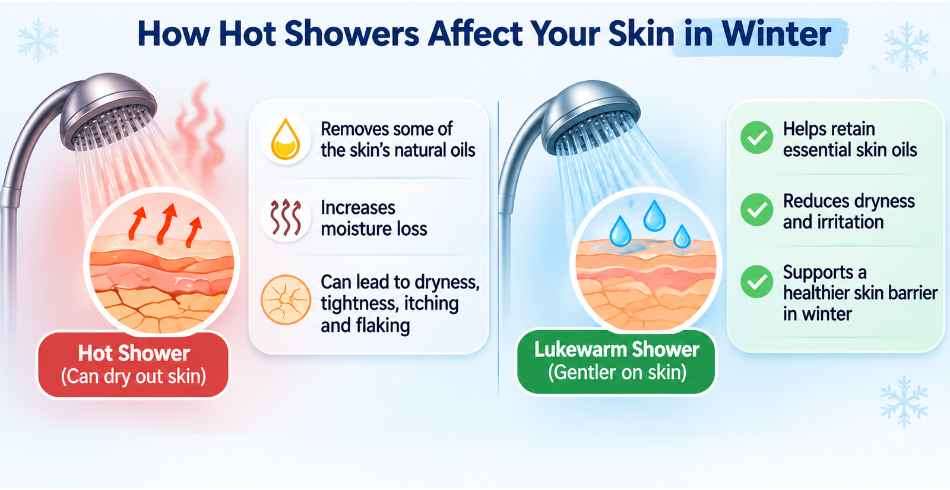
A hot shower does not automatically damage everyone's skin. The effect depends on water temperature, shower duration, cleansing products and the condition of your skin.
However, repeated exposure to very hot water can contribute to:
- Loss of natural oils: Hot water and prolonged washing can remove some surface lipids that help maintain the skin barrier.
- Increased dryness: Water loss from the outer skin layer can leave the skin feeling tight and rough.
- Itching and irritation: Dry skin may become itchy, especially if you already have sensitive skin.
- Flaking and cracking: Severe dryness can cause visible flakes and painful cracks.
- Worsening of eczema: People with eczema may experience increased irritation and itching after hot showers.
If your skin feels tight immediately after bathing, it may be a sign that your cleansing routine is too harsh or that you need a more suitable moisturiser.
What Is the Ideal Shower Temperature in Winter?
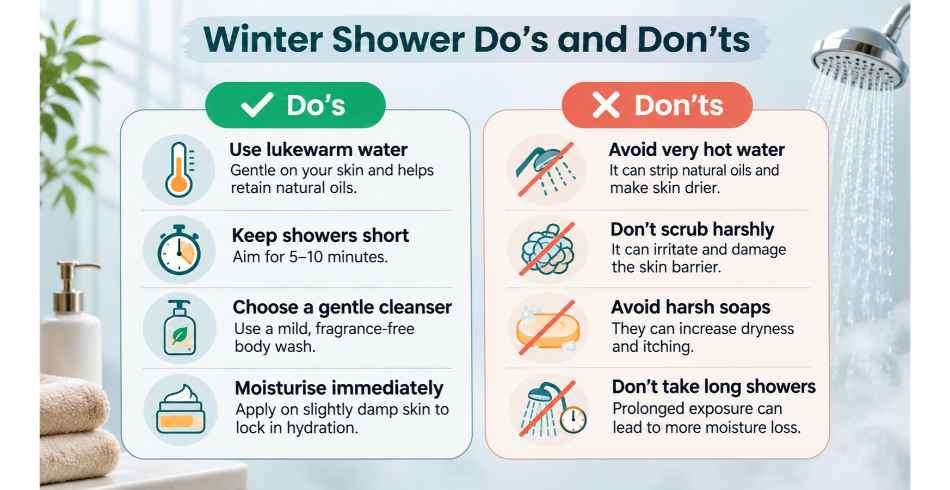
Lukewarm water is generally better for your skin than very hot water.
You do not need to take cold showers during winter to maintain healthy skin. Simply reduce the temperature until the water feels comfortably warm rather than hot.
Dermatologists commonly recommend:
- Use lukewarm water instead of very hot water.
- Keep showers around 5 to 10 minutes.
- Avoid repeatedly washing the same areas with soap.
- Use a gentle, fragrance-free cleanser.
- Pat your skin dry instead of rubbing it vigorously.
- Apply moisturiser immediately after bathing.
These small changes can help reduce irritation and support the skin's natural protective barrier.
How to Prevent Dry Skin After a Shower in Winter
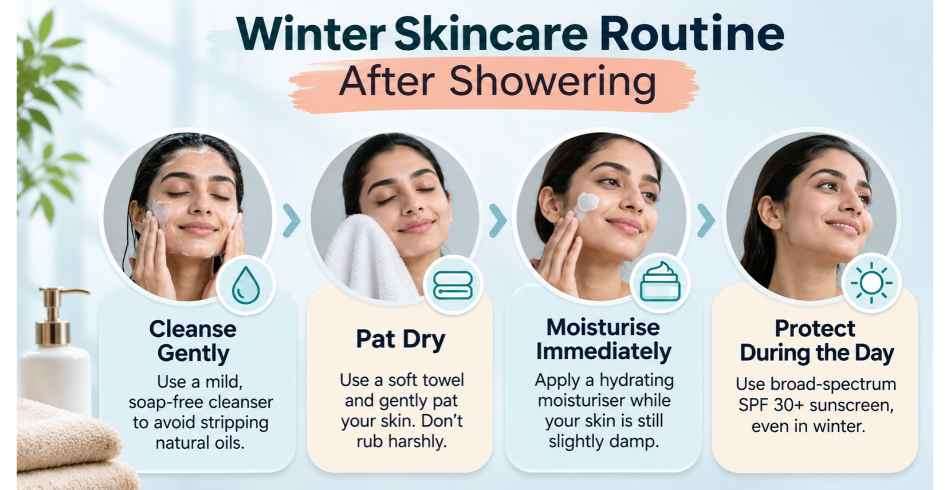
Your skincare routine immediately after bathing is just as important as the shower itself.
1. Choose a Gentle Body Wash
Avoid harsh soaps and strongly fragranced cleansers if your skin is dry or sensitive. Choose a gentle cleanser that does not leave your skin feeling tight.
2. Avoid Rubbing Your Skin With a Towel
After bathing, gently pat your skin with a soft towel. Leave it slightly damp rather than rubbing it completely dry.
3. Apply Moisturiser Within a Few Minutes
Apply moisturiser while your skin is still slightly damp. This helps retain moisture in the outer layer of the skin.
Look for ingredients such as:
- Ceramides: Help support the skin barrier.
- Glycerin: Attracts water to the skin.
- Hyaluronic acid: Helps bind water in the outer layer.
- Petrolatum: Helps reduce moisture loss.
- Shea butter: Helps soften dry skin.
Creams and ointments are often more effective than lightweight lotions for very dry skin.
4. Do Not Over-Exfoliate
Avoid frequent body scrubs, rough loofahs and aggressive exfoliation. These can irritate already dry skin and make discomfort worse.
5. Moisturise Whenever Your Skin Feels Dry
You do not have to moisturise only after bathing. Reapply when your skin feels tight, rough or uncomfortable.
The American Academy of Dermatology recommends applying moisturiser several times a day when needed, particularly after washing.
Is Hot Water Bad for Your Face Too?
Yes. The skin on your face can also become dry or irritated after repeated exposure to very hot water.
This may be more noticeable if you have sensitive skin, eczema or an impaired skin barrier.
For your face during winter:
- Wash with lukewarm water.
- Use a gentle facial cleanser.
- Avoid harsh face scrubs.
- Apply a moisturiser suitable for your skin type.
- Continue using broad-spectrum
- SPF 30+ sunscreen during the day.
Avoid washing your face repeatedly with hot water in an attempt to remove excess oil. This can make dryness and irritation worse.
Does Hot Water Cause Eczema to Flare Up?
Hot water can worsen itching and dryness in people with eczema or atopic dermatitis.
People with eczema already have a weakened skin barrier, which makes it harder for their skin to retain moisture. Hot showers, harsh cleansers and fragranced products may further irritate the skin.
If you have eczema, consider:
- Taking short showers with lukewarm water.
- Using fragrance-free cleansers.
- Applying a suitable moisturiser immediately after bathing.
- Avoiding rough towels and excessive scrubbing.
- Following your dermatologist's prescribed treatment.
If itching, redness or inflammation continues, consult a dermatologist rather than relying only on moisturisers.
When Should You See a Dermatologist?
Occasional dryness during winter is common. However, persistent symptoms may indicate an underlying skin condition.
Consult a dermatologist if you experience:
- Severe or persistent itching.
- Red, inflamed or painful patches.
- Repeated skin cracking or bleeding.
- Dryness that does not improve with regular moisturising.
- A rash that spreads or becomes worse.
- Symptoms that interfere with sleep or daily activities.
A dermatologist can determine whether the dryness is related to seasonal changes, eczema, contact dermatitis or another skin condition.
Frequently Asked Questions
1. Do hot showers make your skin dry in winter?
Yes. Hot water and prolonged bathing can remove some of the natural oils that protect your skin. This can increase dryness, itching and irritation, particularly during winter when humidity is low.
2. What is the best shower temperature for dry skin?
Lukewarm water is generally recommended. Avoid water that feels very hot, especially if you have dry, sensitive or eczema-prone skin.
3. How long should a winter shower last?
Dermatologists generally recommend keeping showers to around 5 to 10 minutes. Shorter showers with lukewarm water can help prevent excessive dryness.
4. Should I moisturise immediately after a shower?
Yes. Gently pat your skin dry and apply moisturiser while it is still slightly damp. This helps retain moisture and reduce dryness.
5. Can hot showers cause itching without a rash?
Yes. Hot water can worsen dryness and irritation, which may cause itching even without a visible rash. Persistent or severe itching should be assessed by a dermatologist.
6. Is cold water better than hot water for skin?
You do not need to take cold showers to protect your skin. Lukewarm water is a comfortable option that helps avoid the excessive dryness associated with very hot water.
7. Can hot showers worsen eczema?
Yes. Hot water can aggravate dryness and itching in people with eczema. Short, lukewarm showers followed by regular moisturising are generally recommended.
8. Which moisturiser is best for dry skin in winter?
Creams and ointments containing ingredients such as ceramides, glycerin or petrolatum can help manage dry skin. The best option depends on your skin type and individual needs.
Final Takeaway
Hot showers may feel comforting during winter, but repeated exposure to very hot water can make dry skin worse. The combination of low humidity, harsh cleansers and prolonged bathing can weaken the skin's protective barrier and increase moisture loss.
A simple winter bathing routine can make a difference: choose lukewarm water, keep showers short, use a gentle cleanser and apply moisturiser immediately afterwards.
Healthy winter skin is not about using more products. It is about protecting your skin barrier and maintaining consistent care.
Medical Disclaimer: This article is intended for general educational purposes and does not replace personalised medical advice, diagnosis or treatment. Consult a qualified dermatologist if you experience persistent dryness, itching, inflammation or skin cracking.
References
- American Academy of Dermatology Association.Dermatologists' Tips for Relieving Dry Skin
American Academy of Dermatology Association.Cold Weather and Your Skin
Cleveland Clinic.How to Prevent Dry Skin This Winter
Mayo Clinic.Dry Skin: Diagnosis and Treatment
Columbia University Irving Medical Center.A Dermatologist's Guide to Healthy Winter Skin