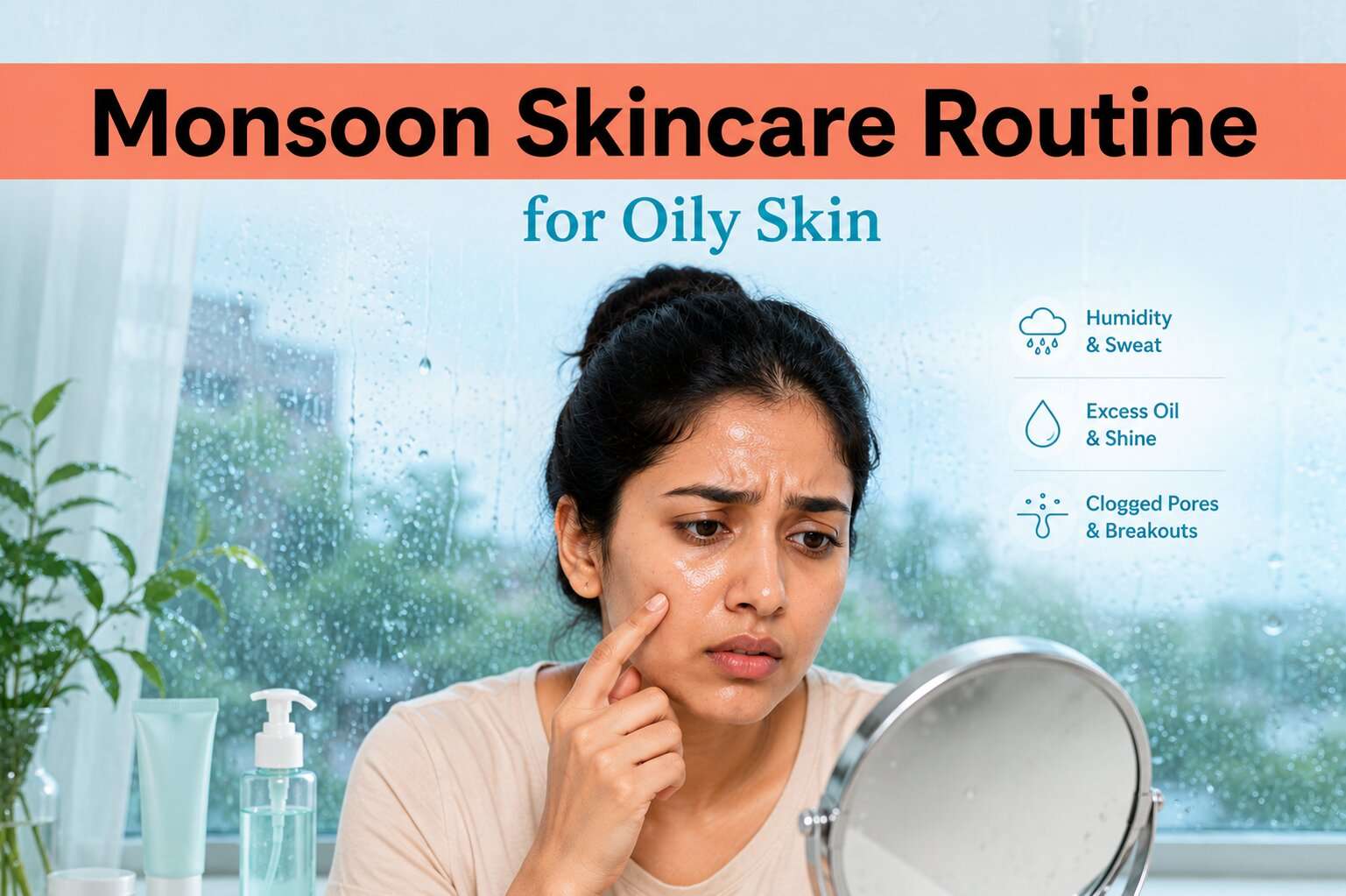
Monsoon skincare routine involves more than just taking care of one's face. Good skin starts with a healthy scalp. It is important to pay attention to one's scalp health during monsoon season, or else there could be issues like hair loss, irritation, fungal infection, etc. The following information will throw light on the impact of monsoon weather on the scalp.
How does the monsoon impact scalp health?
Humid air due to the monsoon season increases moisture levels in the atmosphere. Higher moisture level triggers oil glands, resulting in greasy and sticky scalp. Accumulation of sweat with dirt and pollution is favourable for bacterial and fungal growth.
People suffering from oily skin are also affected by oily scalp problems. It results in dandruff, itching, irritation of the scalp, foul smell, and falling hair. Regular exposure to rain water might disturb the balance of your scalp, thereby making your scalp susceptible to various infections. Ineffective monsoon skincare routine can even make your hair follicles clogged up and weaken the roots of the hair.
Best monsoon skincare routine
Here are few best tips for maintaining monsoon skincare routine:
1. Keep your scalp clean
Clean your scalp regularly and remove moist, dirt, sweat, or any other impurity from your hair.
Keeping your scalp clean prevents any dandruff, fungi, and build up in follicles, which lead to hair fall during monsoon season.
2. Use mild shampoo
Select a gentle shampoo that suits your scalp type as too strong shampoo products strip the natural oils from your hair, causing them to produce excessive oil. It is best for your hair to maintain cleanliness without causing dryness and irritation.
3. Do not go outside under rain
Rainwater is usually contaminated with many impurities and pollutants that can irritate the scalp. When your hair gets wet with rainwater, you must cleanse it by using clean water.
4. Keep your scalp dry
Keeping your scalp moist makes it conducive for fungal formation and itching. Dry your scalp completely after cleaning it from any products or water.
5. Avoid harsh chemical
Harsh chemical products like styling gels, creams, and serums have the tendency to react with sweat and oil to create a build up on the scalp. In the monsoon season, one should try using light hair products to keep their scalp fresh.
6. Maintain a healthy diet
These foods ensure good scalp and hair condition. It is recommended to include fruits, vegetables, proteins, nuts, and plenty of water into your diet. Healthy nutrition contributes to strong hair follicles and better scalp state.
7. Do not share personal hair accessories
Your combs, brushes, hair bands and towels may serve as transmitters of infections like bacteria and fungi. Personal hygiene will minimize risks of developing seasonal scalp problems.
8. Massage your scalp
Gentle scalp massage improves blood circulation and contributes to the healthy hair growth. Avoid rubbing to avoid irritation and hair damage.
9. Remove dandruff
Do not ignore your dandruff in the monsoon. Immediate treatment of the problem will help you avoid such symptoms as itching, inflammation, increased flaking, and severe hair loss.
10. Consult specialists if necessary
In case your scalp irritation, dandruff, infection, or hair fall persists, you should consult professionals. Early diagnosis is crucial to solve these issues.
Read Also: Monsoon Glow-Up: Are You Making These Skincare Mistakes?
Read Also: Monsoon Glow-Up: Are You Making These Skincare Mistakes?
When is the best time to consult a dermatologist in Delhi?
Most people visit a dermatologist only when their scalp and skin condition becomes unbearable. But, visiting a dermatologist in Delhi at the initial stage of skin and scalp problems such as continuous dandruff, excess oil secretion, itchy skin, redness, hair loss, or scalp infection issues will help you find solutions easily.
At SkinQure, the patients get individual attention from Dr. Jangid. We provide services after a proper skin and scalp test using innovative diagnostic tools. The customized treatment procedure of our skin clinic in Delhi covers medical therapy for your scalp and dermatologist-approved products, hair restoration, and preventive treatment as well. Following an advanced approach and experience in providing skincare services, our clinic stands as one of the best skin clinics in Delhi.
Conclusion
During the monsoon season, people having oily skin and scalp suffer from many problems related to scalp infection, hair fall, and others. Monsoon weather affects your scalp health due to increased humidity level, sweat, pollutants, and other factors. You can minimize such scalp problems by following a proper monsoon skincare routine.
Monsoon skincare routine results in better hair but is also beneficial for boosting overall skin health, and hair growth. In case the symptoms continue, one should consult a good dermatologist in Delhi at a reputable skin clinic in Delhi.
FAQs
1. Why is scalp care important in a monsoon skincare routine?
Hair care is very important during monsoons because of increased oil production and formation of fungi. A monsoon skincare routine helps avoid problems like dandruff, itching, infections, and hair loss.
2. How often should I wash my hair during monsoons?
Washing your hair during the monsoon depends on your scalp condition. If you have an oily scalp, you will have to wash your hair regularly to remove extra oils, dirt, and sweat.
3. When should I consult a dermatologist in Delhi?
If you suffer from prolonged dandruff, itching, redness, hair loss, infections, and other scalp problems which cannot be cured by proper care, then you should go to a dermatologist in Delhi.
4. Do monsoons cause dandruff?
Yes, because of the high humidity levels during the rainy season, dandruff is found more common. The scalp becomes a haven for dandruff-causing bacteria due to moisture. Dont forget to follow the monsoon skincare routine.