

Summer in Delhi is extremely hot. There is also strong UV radiation. Skin damage occurs during this time. People do not pay attention to UV protection. They also do not use the right products. This results in tanning, pigmentation, and premature aging. Selecting the right SPF for Indian skin is vital for Indian skin. It helps in maintaining an even tone. It also helps in maintaining a healthy texture.
This blog will help you guide through how to protect your skin during harsh summers.
Why is SPF important for Indian skin?
The melanin level is higher in Indian skin. This offers some protection. However, it does not completely shield your skin from UV radiation. There is still some damage. This includes sunburn, dark spots, and dullness.
It is important to choose a correct SPF for Indian skin. It creates a protective shield. It prevents UV radiation from penetrating. It also slows down the process of aging. Wrinkles and fine lines appear much later.
What is the best SPF for Indian skin for Indian skin tone?
Not every sunscreen is suitable for every type of skin. Indian skin tones vary. They vary from whitish to dark brown. There are some sunscreens that leave a white cast. This makes your skin uneven.
The selection of an appropriate sunscreen for Indian skin tone is important. It is recommended to use lightweight sunscreens. It is better to use gel texture or matte finish sunscreens. These can be applied smoothly without any mess. It is important to use a broad spectrum of sunscreen. It should contain protection from both UVA and UVB rays. It is recommended to use SPF 30 or higher.
Common summer skin problems
Here are few most commonly occurred skin problems:
- Sunburn
- Tanning
- Acne breakouts
- Heat rash
- Excess oil production
- Dehydrated skin
- Pigmentation
- Allergic reactions
How to protect skin from summer?
1. Use sunscreen daily
Use sunscreen daily. This protects you from harmful UV rays. Re-apply it every two to three hours. Sunscreen for Indian skin tone prevents tanning, burning, and premature aging effectively.
2. Stay hydrated
Drink water throughout the day. This maintains skin elasticity. This also flushes out toxins. Proper hydration helps keep your skin fresh, glowing, and healthy, and also prevents dry skin.
3. Wear protective clothing
Wear light and loose cotton clothes. Also, wear hats, sunglasses, and scarves. Full covered dress helps to protect your skin from direct exposure to sunlight.
4. Follow a gentle skincare routine
Gentle skincare products should be used. Avoid using harsh skincare products. Wash your skin twice a day to remove accumulated sweat and dirt.
5. Avoid peak sun hours
Stay indoors from 11 am to 4 pm. Sun exposure is maximum from 11 am to 4 pm. This reduces the chances of sunburn, tanning, and skin damage.
How to choose the right SPF for Indian skin?
The best sunscreen for Indian skin tone can be determined by the type of skin you have. However, not all sunscreens can be used for all types of skin.
1. For oily skin
Gel-based sunscreen is best for oily skin. It helps to regulate excess oil. It is non-greasy and non-sticky.
2. For dry skin
Cream-based sunscreen is best for dry skin. It helps to hydrate the skin. It prevents dryness caused due to sun exposure.
3. For sensitive skin
For sensitive skin, fragrance-free sunscreen for Indian skin tone is best. It avoids the use of harsh chemicals. Mineral-based sunscreens are good options.
4. SPF level
SPF 30 or above is best for daily use. SPF 50 is best if there is high sun exposure.
Always, a correct SPF for Indian skin is essential to reduce pigmentation and maintain the skin’s protective barrier.
How to apply sunscreen correctly?
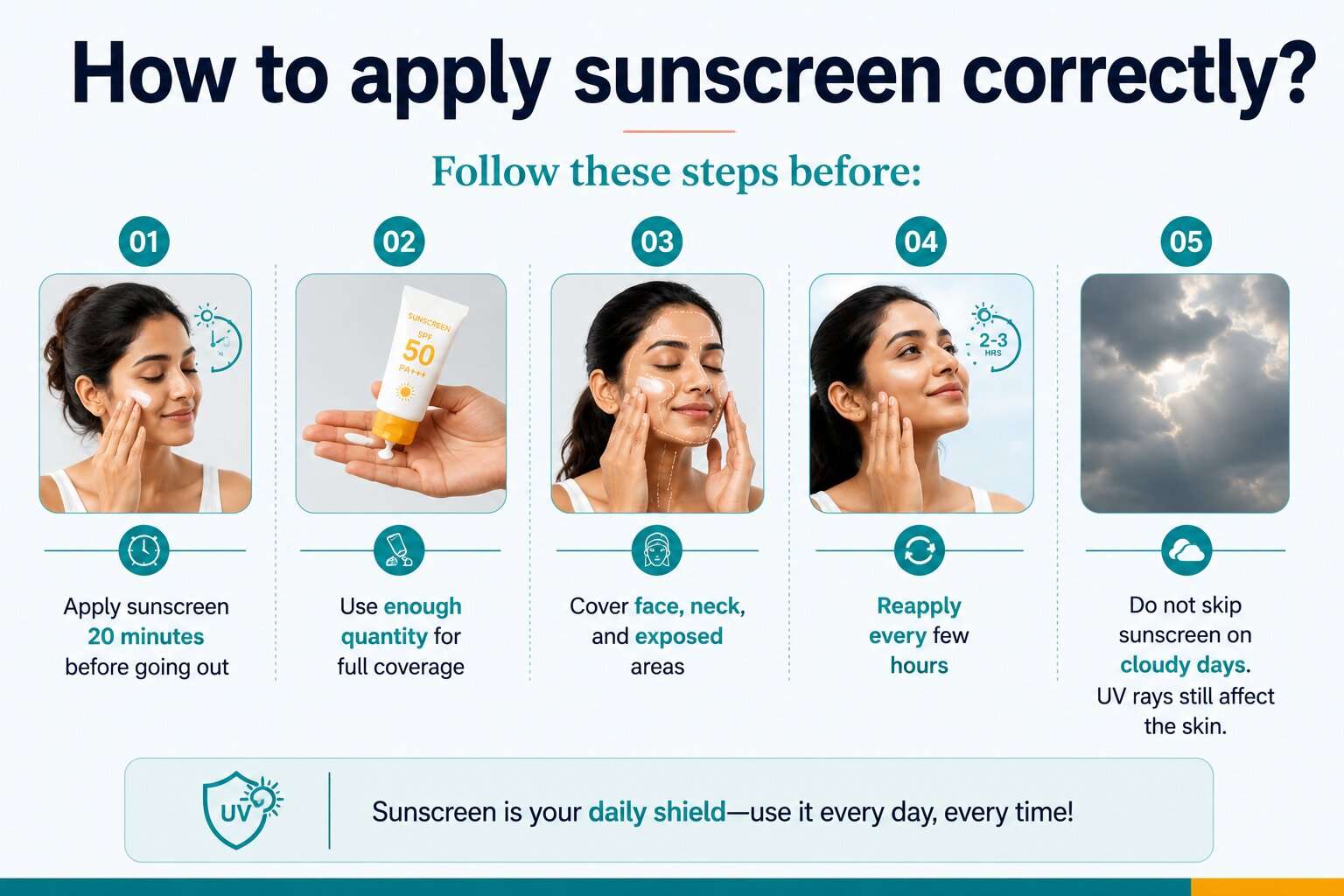
Many people apply sunscreen incorrectly. This reduces its effectiveness.
Follow these steps before:
- Apply sunscreen 20 minutes before going out
- Use enough quantity for full coverage
- Cover face, neck, and exposed areas
- Reapply every few hours
- Do not skip sunscreen on cloudy days.
- UV rays still affect the skin.
Additional tips for sun protection
Sunscreen for Indian skin tone alone is not enough to protect yourself from sun damage. This is why it is highly recommended to:
- Wear sunglasses
- Use hats or scarves
- Avoid peak sun hours
- Stay hydrated
- Use antioxidant-rich skincare
Knowing how to protect skin from UV Delhi summer is essential in maintaining long-term skin health.
Long-term benefits of using SPF for Indian skin
The correct use of SPF for Indian skin helps maintain quality skin. It prevents early aging. It reduces wrinkles on your skin. It also maintains an even skin tone.
Using SPF for Indian skin helps control pigmentation. It maintains healthy skin. It also enhances the effectiveness of your skincare routine.
Sunscreen is the most important anti-aging product. It shows clear results on your skin if you use it regularly.
Conclusion
SPF for Indian skin is essential to use in summer. It helps protect your skin from tanning, pigmentation, and aging. It is essential to choose the best sunscreen for Indian skin tone to get better results. It is essential to use it on your skin every day. Understanding how to protect your skin from UV Delhi summer helps maintain healthy skin.
At SkinQure, you can get the best care for your skin. Dr. Jangid suggests using sunscreen on your skin to get better results. It maintains smooth, clean, and damage-free skin, even in harsh summer weather.
FAQs
1. What is the best SPF for Indian skin?
Spf 30 is recommended for Indian skin. Spf 50 is recommended if you have to stay outdoors for long hours.
2. What is the best sunscreen for Indian skin tone?
The best sunscreen for Indian skin tone is non-greasy. Gel-based sunscreens are recommended for Indian skin tone. They do not allow white casts on the skin.
3. How do you protect your skin from UV rays?
To protect your skin from UV rays in Delhi summer, you should apply sunscreen on your skin. You should also wear protective gear. Applying sunscreen on your skin is recommended. You should avoid stepping out during peak sun hours.
4. Can sunscreen prevent tanning on your skin?
Yes, sunscreen is effective in preventing tanning on your skin. However, it cannot prevent tanning on your skin completely.
5. How often should you apply sunscreen on your skin?
Sunscreens should be applied every 2 hours if exposed to the sun. More frequent reapplication is recommended if sweating, swimming, or wiping your face. Apply sunscreen 15-20 minutes before going outside. Apply sunscreen daily, including days with cloudy skies.
6. Do you need to apply sunscreen even if you stay indoors?
Yes, you should apply sunscreen on your skin even if you stay indoors. Ultraviolet rays, especially UVA, pass through glass or windows. The rays damage your skin. Prolonged exposure may result in tanning, pigmentation, premature aging, and even skin cancer.