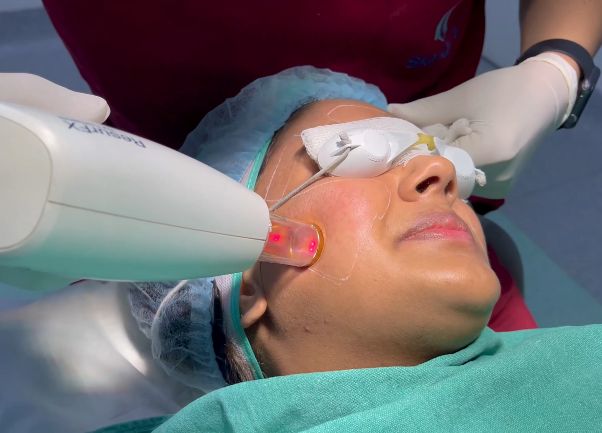
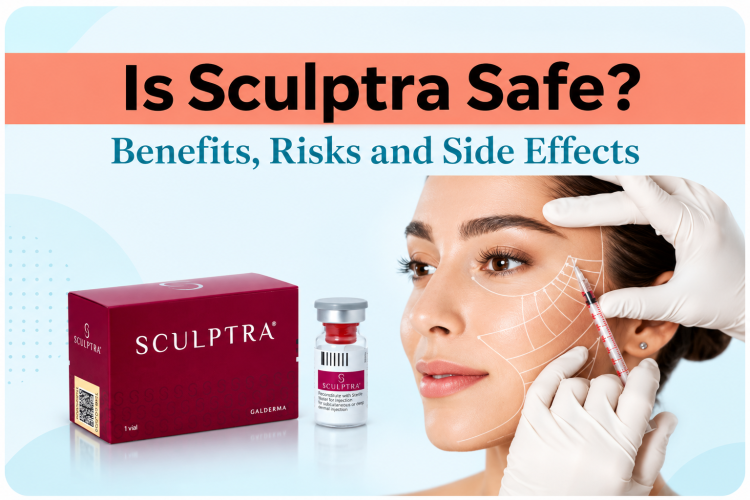
Sculptra has become one of the most talked-about anti-ageing injectables, and since its India launch in 2026 many people in Delhi have started asking about it. Unlike a regular filler that adds volume straight away, Sculptra works slowly by helping your skin build its own collagen.
Because it works differently, it is natural to have questions about safety. This guide explains what Sculptra is, what the research says about its safety, its real benefits, the side effects to expect and who should avoid it. If you want to know more about the procedure itself, read our complete guide to Sculptra Treatment in Delhi.
What Is Sculptra and How Does It Work?
Sculptra is an injectable made from poly-L-lactic acid (PLLA), a biodegradable material that the body breaks down naturally over time. It is known as a collagen stimulator or biostimulator.
Here is how it works, in simple steps:
- A doctor injects tiny PLLA particles into the deeper layers of the skin.
- The particles trigger the body's natural repair response.
- Over the following weeks and months, the skin makes new collagen around the particles.
- The PLLA itself slowly dissolves, while the new collagen stays and gives the skin firmer support.
This is why Sculptra results look gradual and natural. A few days after treatment, once swelling settles, you may look much as you did before. The visible change builds up over the next few months as collagen grows.
Is Sculptra Safe? What the Evidence Says
Sculptra has a long safety record. Here are the key facts:
- Over 25 years of use: Sculptra was first approved in Europe in 1999 and in the United States in 2004.
- Steady expansion of US FDA approvals: The FDA first approved it in 2004 to restore facial fat loss in people with HIV, then in 2009 for smile lines (nasolabial folds) and other facial wrinkles, and in 2023 for fine lines and wrinkles in the cheeks.
- Available in India: Galderma, the company that makes Sculptra, announced its launch in India in July 2026.
- Mostly mild side effects: A recent review found that most side effects were mild and settled on their own without extra treatment.
- The main risk has fallen with better technique: Early studies reported small lumps in a large share of patients. In a later review of over 1,000 patients treated with today's higher dilution, lumps were reported in just 0.4%, and all of them resolved.
In short, Sculptra's safety depends heavily on who injects it and how. Correct mixing, correct depth and avoiding high-risk areas all lower the chance of problems.
Benefits of Sculptra
- Builds your own collagen: Instead of only filling a line, it helps the skin rebuild its support structure.
- Natural-looking change: Results appear slowly, so people tend to notice that you look fresher rather than "done".
- Long-lasting results: Results can last up to two years in many people, longer than most regular fillers.
- Improves skin quality: Along with smoothing wrinkles, it can improve firmness and glow.
- Treats several concerns: It is used for smile lines, cheek wrinkles, loss of facial volume and general skin laxity.
- Little downtime: Most people go back to normal daily activities soon after treatment, though some swelling or bruising may show for a few days.
Keep in mind what Sculptra is not: it does not give instant results, and it usually needs a series of sessions. Galderma notes that on average about three sessions over a few months may be needed.
Sculptra Side Effects and Risks
Common, temporary side effects
These are the usual effects of any injection and generally settle within a few days:
- Swelling
- Redness
- Bruising
- Tenderness or mild pain at the injection site
- Itching
- Slight bleeding at the needle points
The early swelling can make the face look fuller for a day or two. This fades and is not the final result.
Lumps (papules and nodules)
Small bumps under the skin are the side effect most linked to PLLA. They usually appear several weeks after treatment, can often be felt rather than seen, and frequently go away on their own.
They are more likely when the product is too concentrated, placed too shallow, or injected into areas with a lot of muscle movement, such as around the eyes and lips. Some can appear months later. Unlike hyaluronic acid fillers, Sculptra cannot be dissolved with an enzyme, which is one more reason to choose an experienced injector.
Rare but serious risks
- • Allergic or inflammatory reactions, including granulomas, a delayed inflammatory reaction.
- Infection at the injection site.
- Blocked blood vessels, which can cause skin damage or, very rarely, vision problems. A 2020-2025 analysis of US FDA reports found these vascular events were uncommon and mostly involved high-risk areas.
Seek urgent medical help if you notice severe or worsening pain, skin turning white, grey or blue, or any change in your vision after treatment.
Who Should Avoid Sculptra?
Sculptra may not be suitable if you:
- Are allergic to any of its ingredients
- Have a history of keloids or raised (hypertrophic) scars
- Have an active skin infection or inflammation, such as active acne, in the treatment area
- Are pregnant or breastfeeding, or under 18, as safety has not been established in these groups
- Have a weakened immune system, an autoimmune or connective tissue condition, or a bleeding disorder, unless your doctor has assessed you carefully
Sculptra is also not meant for the red part of the lips. Always tell your doctor about your medical history, medicines and supplements, and any previous fillers or cosmetic procedures.
How to Make Sculptra Treatment Safer
- Choose a qualified doctor: Sculptra should be injected by a trained dermatologist in Delhi or another qualified medical professional who knows facial anatomy well.
- Ask for genuine product: Check that the product is original Sculptra, sealed and from an authorised source.
- Have a proper consultation: A good doctor will assess your face, discuss realistic results and tell you if another treatment suits you better.
- Follow aftercare advice: Your doctor may advise massaging the area for a set period after treatment, often called the "5-5-5" rule, so follow their exact instructions.
- Attend follow-ups: Sessions are spaced weeks apart so your doctor can check how your skin is responding before adding more.
- Be patient: Do not ask for extra product to see faster results. Overcorrection raises the risk of lumps.
At SkinQure, a dermatologist-led Skin Clinic in Delhi, every Sculptra plan starts with a face-to-face assessment of your skin, medical history and goals. Learn more about the treatment process on our Sculptra Treatment in Delhi page.
Frequently Asked Questions
Is Sculptra safe?
Yes, for most healthy adults when injected by a trained doctor. It is approved by the US FDA and has been used for over 25 years. Most side effects are mild and temporary.
What are the most common side effects of Sculptra?
Swelling, redness, bruising, tenderness and itching at the injection sites are the most common. They usually settle within a few days.
Can Sculptra cause lumps?
Yes, small lumps under the skin can develop, sometimes weeks or months later. With modern dilution and injection technique, they are uncommon, and many resolve on their own.
Can Sculptra be reversed?
No. Unlike hyaluronic acid fillers, Sculptra cannot be dissolved. The product breaks down naturally over time, which is why choosing an experienced doctor matters.
How long do Sculptra results last?
Results can last up to about two years, though this varies with age, skin condition, treatment area and lifestyle.
Is Sculptra available in India?
Yes. Galderma announced the launch of Sculptra in India in July 2026.
Who should not get Sculptra?
People who are pregnant or breastfeeding, under 18, allergic to its ingredients, prone to keloids, or who have an active skin infection in the area should avoid it. People with immune or connective tissue conditions need careful assessment first.
Conclusion
Sculptra is a well-studied treatment with a good safety record when used correctly. Its benefits, natural-looking collagen growth and long-lasting results, come with mostly mild, short-term side effects. The main risk, small lumps, depends largely on technique, which makes your choice of doctor the most important safety decision you will make.
If you are considering Sculptra, book a consultation with a qualified dermatologist to find out whether it suits your skin and goals.
Disclaimer: This article is for general information and awareness only and does not replace a consultation with a qualified doctor. Suitability, results and side effects vary from person to person. Sculptra is a prescription injectable and should only be given by a qualified medical professional after a proper assessment.
References
- Galderma: FDA approval for cheek wrinkles
- Galderma Aesthetics: your Sculptra treatment
- Indian Pharma Post: Sculptra launch in India
- Sanofi: 2009 FDA approval and safety information
- PMC: advances in PLLA injections
- PMC: safety of immediate PLLA reconstitution
- Cosmetics (MDPI): expert recommendations on PLLA-SCA
- Cosmetics (MDPI): reappraisal of PLLA
- Journal of Drugs in Dermatology: PLLA adverse events
- PubMed: PLLA safety in FDA reports, 2020-2025